Ghana’s Subsea Cable Crisis Reveals Deep Digital Vulnerabilities
Ghana Internet Outage Exposes Africa’s Fragile Subsea Cable Infrastructure

 Ghana internet outage concerns are still unfolding a month after a major disruption exposed the fragile foundations of Africa’s digital infrastructure, forcing businesses, banks, and millions of users offline in March 2024. What began as a sudden slowdown quickly escalated into a nationwide crisis as mobile money transactions failed mid-process, banks reverted to manual operations, and businesses reliant on constant connectivity struggled to function in an increasingly digital economy.
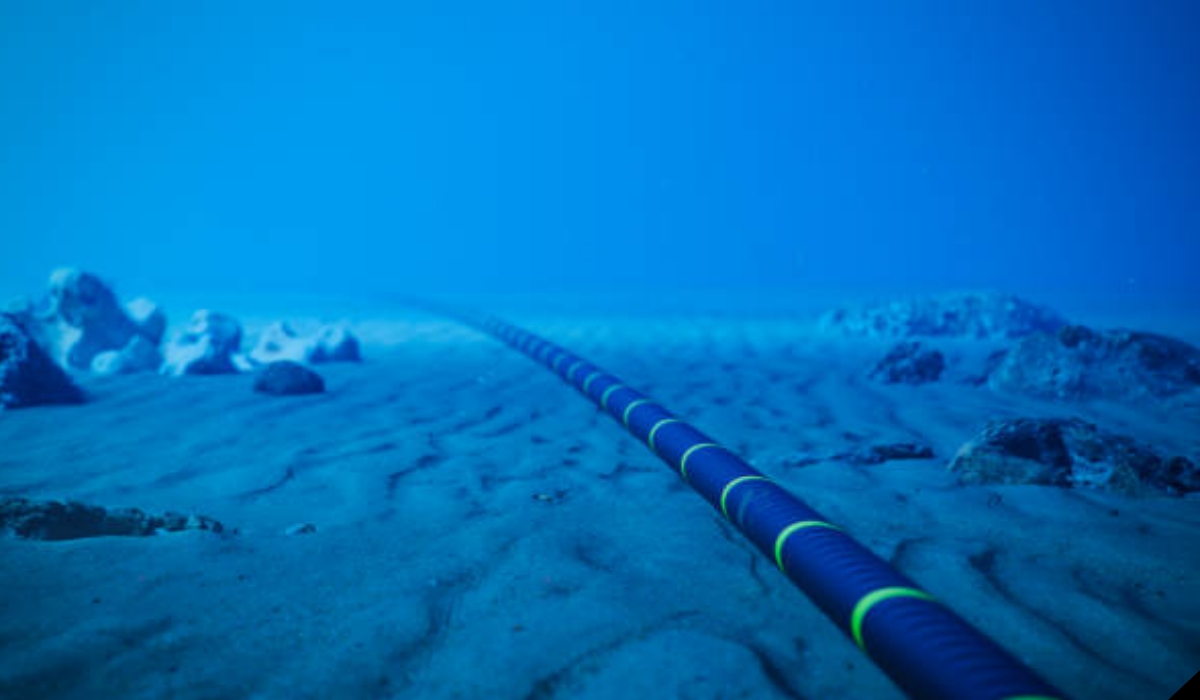
Although connectivity has largely been restored, the incident has triggered a deeper reassessment of a critical structural weakness: Ghana’s internet ecosystem depends heavily on infrastructure beyond its direct control. At the center of the disruption were multiple subsea cable faults along the West African coastline, where underwater cables running across the Atlantic Ocean carry the overwhelming majority of international internet traffic into the region.
These subsea cables are designed with some level of redundancy, but the system is not built to withstand multiple simultaneous failures. When several lines were compromised, traffic congestion quickly intensified, leading to widespread outages across multiple countries. In Ghana, the impact was immediate, cutting across financial services, commerce, logistics, and media.
The country’s financial ecosystem, deeply integrated with real-time connectivity, was among the hardest hit. Mobile money platforms stalled, payment systems delayed transactions, and banks were forced to fall back on manual processes. For small and medium-sized enterprises, the disruption translated directly into lost revenue as sales channels, customer communication, and cloud-based tools became inaccessible. Informal traders who depend on mobile payments saw daily income drop sharply, while logistics operators lost visibility over shipments and delivery timelines.
Beyond the immediate economic impact, the outage revealed how deeply internet connectivity is now embedded in everyday activity. Media organizations struggled to publish and broadcast in real time, while digital platforms that support communication and business operations became unreliable. What might once have been considered a technical issue quickly evolved into a national economic disruption.
In the weeks since, it has become increasingly clear that this was not an isolated incident but a systemic stress test that exposed the limits of existing infrastructure. Ghana’s connectivity relies on a relatively small number of cable landing stations concentrated along its coastline, creating a narrow gateway for international bandwidth. This structure means that disruptions occurring outside national borders can still have severe domestic consequences, often with limited warning and few immediate alternatives.
Compared to more mature digital markets, redundancy remains a significant challenge across much of West Africa. While alternative routing options exist, they are not always sufficient to handle large-scale outages. The result is a cascading effect where a fault in one segment of the network rapidly spreads across countries and sectors, amplifying both technical and economic disruptions.
Attention has also shifted toward the governance of subsea cable systems. These critical assets are typically owned and operated by multinational consortia, placing them outside the direct control of any single government. While they underpin national economies, response and repair timelines depend on coordination between multiple stakeholders across jurisdictions, often leading to delays during critical moments.
For Ghana, the incident raises urgent policy and infrastructure questions. There is growing debate around how digital infrastructure should be classified, protected, and regulated, particularly as economies become more dependent on uninterrupted connectivity. Stakeholders are increasingly calling for stronger protection measures, recognition of fiber and cable systems as critical national assets, and investment in diversified connectivity routes, including inland fiber networks that can serve as backup pathways during outages.
The disruption has also reshaped how internet access is understood. Speed and availability are no longer the only benchmarks of progress; reliability and resilience have become equally important. As Ghana continues to expand its digital economy, the focus is gradually shifting toward building systems that can withstand shocks rather than simply extending access.
A month after the outage, services have resumed, but the assumptions underpinning Ghana’s digital growth have changed. The incident underscored a fundamental reality: rapid digital expansion without corresponding investment in resilience introduces significant risk. As the country moves forward, the challenge will be ensuring that its infrastructure is not only capable of supporting growth but also strong enough to endure the next inevitable disruption.