World Cup 2026 Tables: Every Group Ranked as Knockout Race Tightens
Group Stage Breakdown: USA, Mexico, and Germany Lead Early as Parity Defines 2026 World Cup

 The group stage is entering its decisive phase, where qualification margins are increasingly defined by goal difference and head-to-head efficiency rather than raw results. Across all 12 groups, patterns are emerging: a cluster of dominant early qualifiers, mid-table congestion in several European-heavy groups, and tight third-place battles shaped by defensive margins and late-game efficiency.
A key structural factor shaping the table is the 48-team format. With the top two teams plus eight best third-placed sides advancing, the competition dynamic shifts from “win to qualify” to “manage margins to survive.” This has made goal difference as influential as points in several groups.
Group-by-Group Snapshot (Points & Rankings)
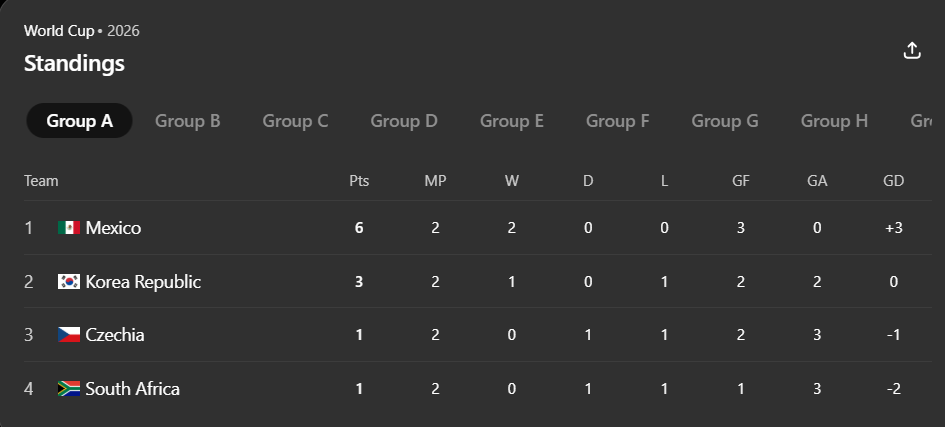 Group A
Mexico leads with maximum control (6 pts, +3 GD), while Korea Republic sits second after an important win. Czechia and South Africa remain tied in survival contention, where a single result reshapes qualification order.
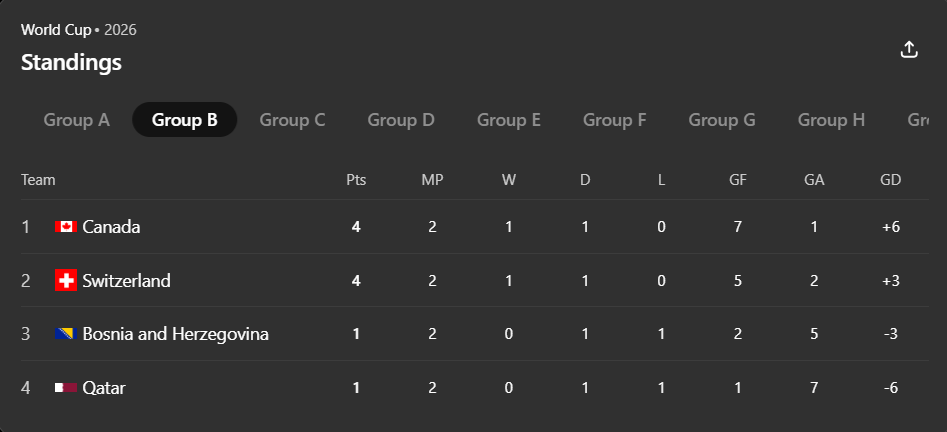 Group B
Canada and Switzerland are locked at 4 points each, but Canada’s attacking output (7 goals) gives them a clear edge. Bosnia and Qatar remain in a must-win position heading into final matches.
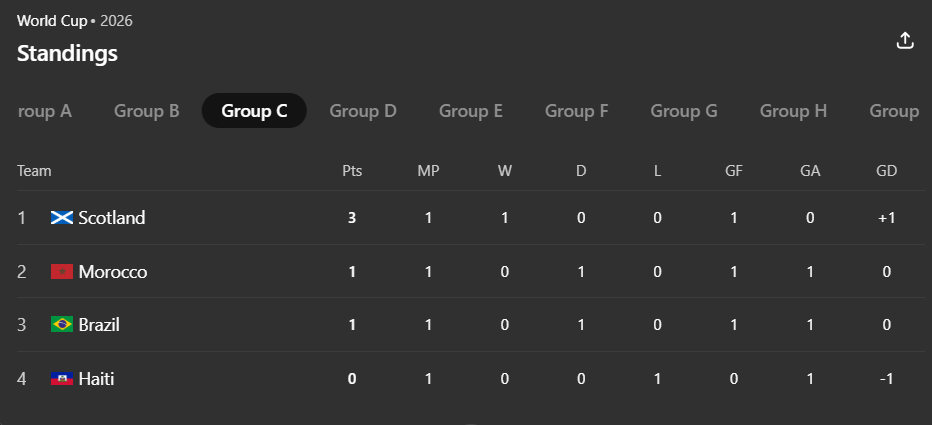 Group C
The most compressed group. Scotland leads narrowly (3 pts), but Brazil and Morocco are level on points and performance metrics, making this one of the most volatile groups remaining.
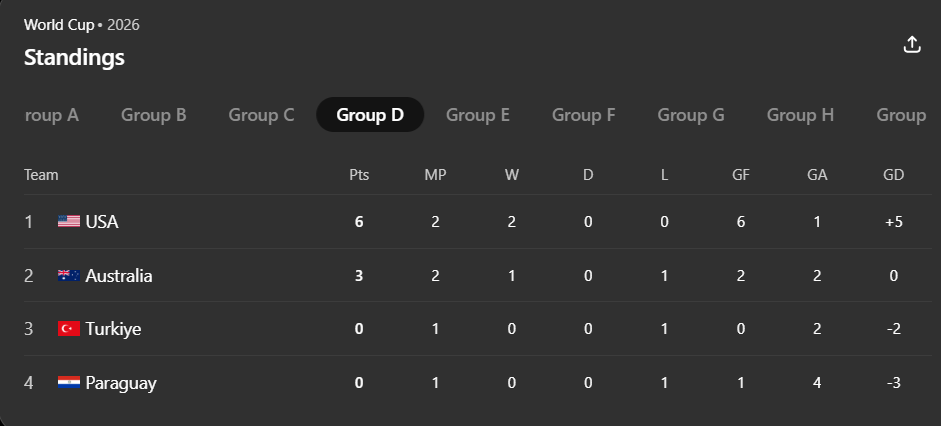 Group D
USA has been the most efficient group leader so far (6 pts, +5 GD). Australia remains the only credible challenger for top two, while Turkey and Paraguay are effectively in elimination pressure.
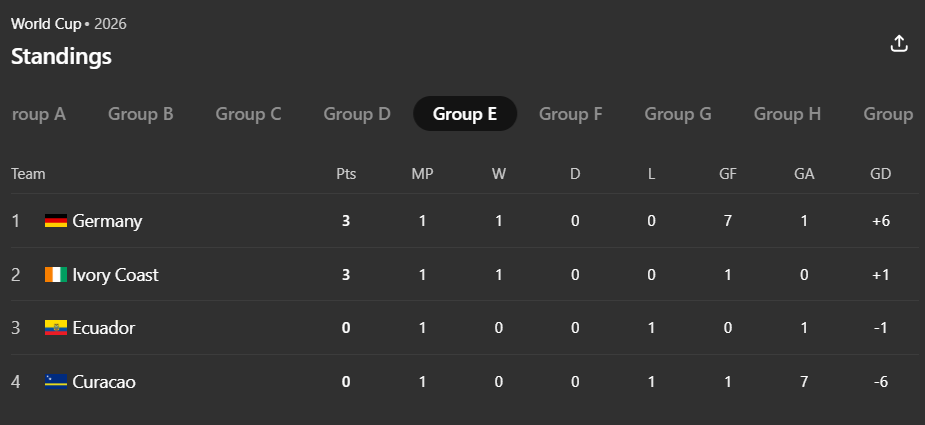 Group E
Germany’s 7-goal opening statement sets them apart on goal difference, though Ivory Coast remains level on points. Ecuador and Curacao face uphill qualification odds.
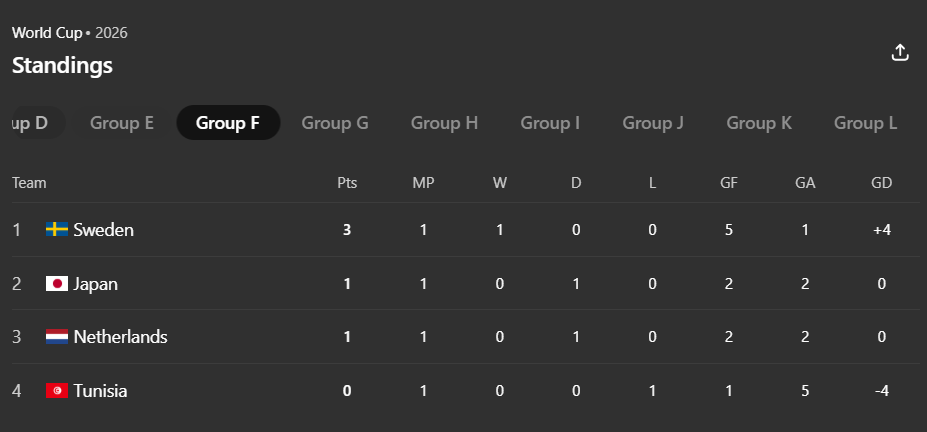 Group F
Sweden leads with attacking dominance (+4 GD), while Japan and Netherlands remain locked at 1 point each—this is still a three-way qualification race.
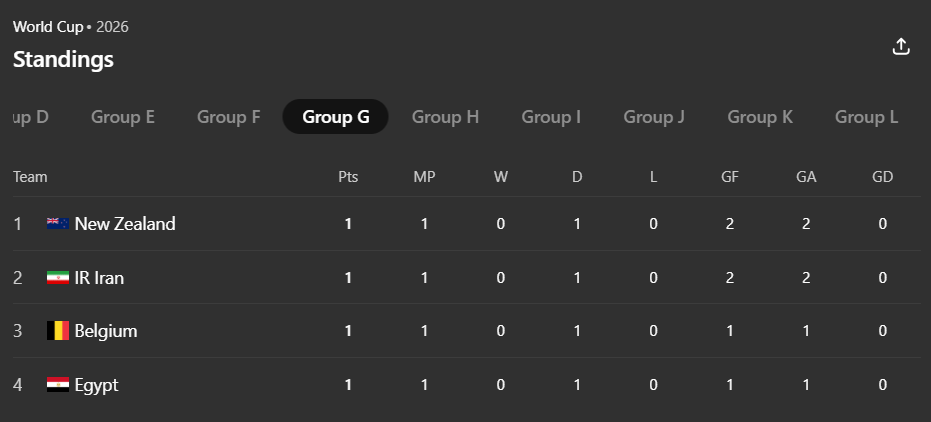 Group G
The most balanced group in the tournament. All four teams are level on points, making it the clearest example of a “fine margins decide everything” scenario.
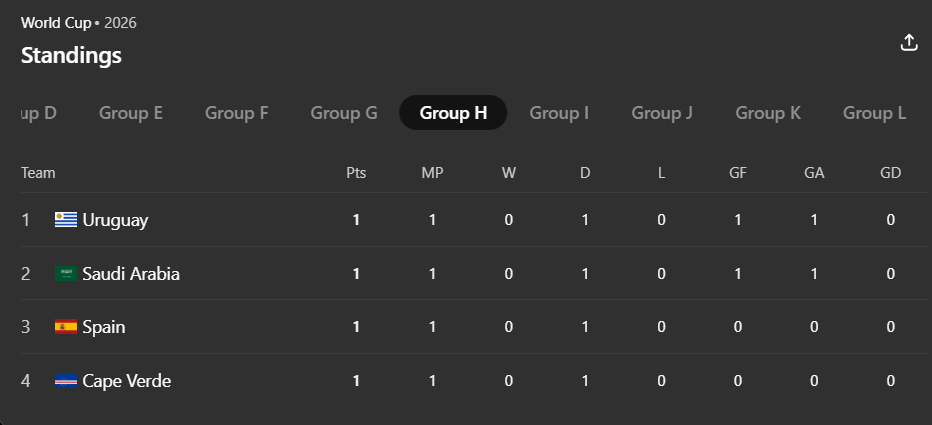 Group H
Another equilibrium group. Every team sits on 1 point, meaning the final fixtures effectively reset the competition into a two-match sprint.
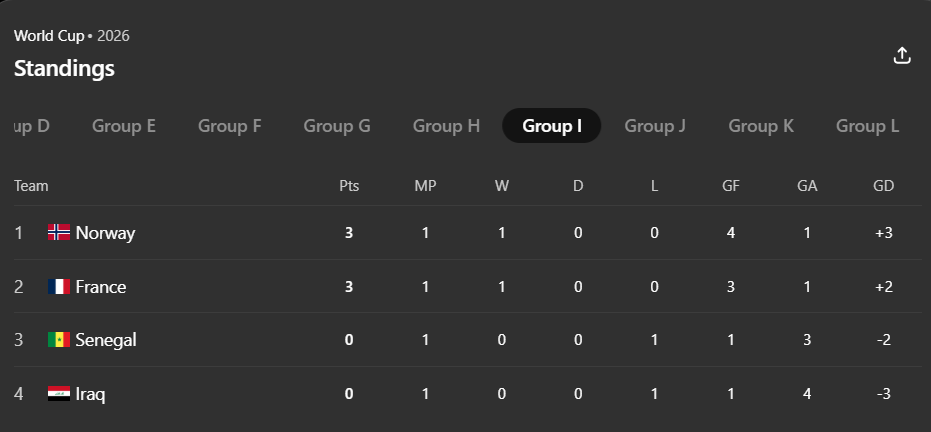 Group I
Norway and France are already separating from the pack with 3 points each. Senegal and Iraq now depend on both results and goal difference swings.
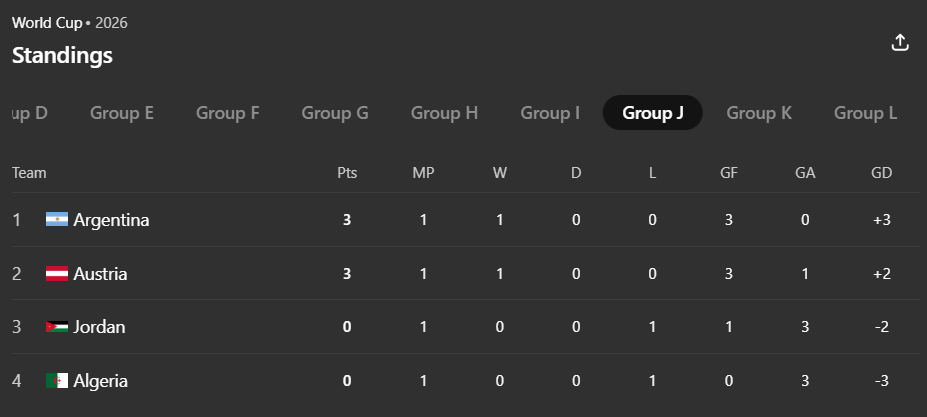 Group J
Argentina and Austria both lead on 3 points, with identical pressure dynamics. Jordan and Algeria remain bottom without points.
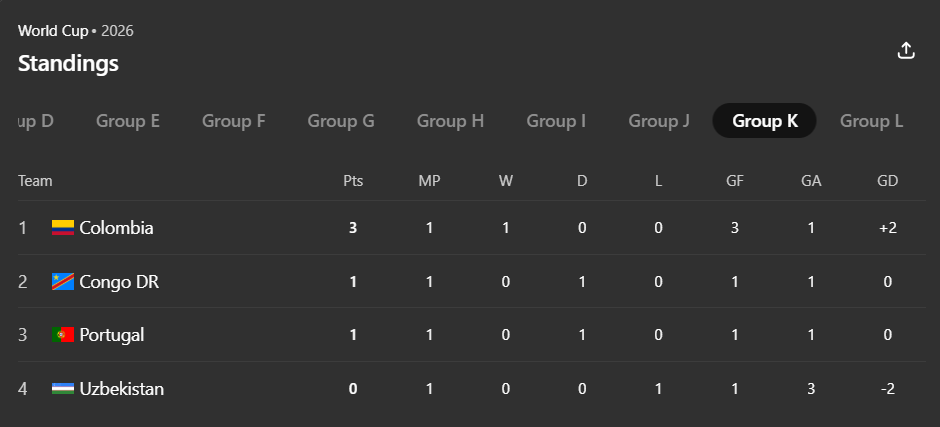 Group K
Colombia leads, but Portugal and DR Congo remain tightly matched in second-place contention. Uzbekistan needs a decisive final matchday swing.
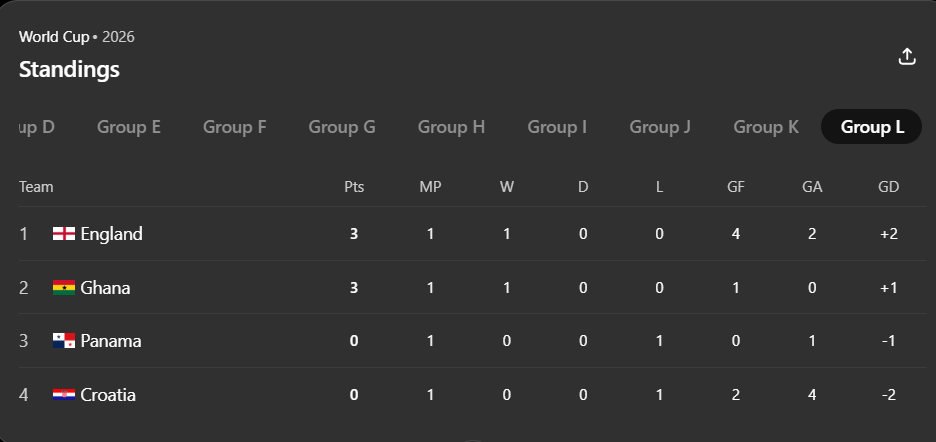 Group L
England and Ghana lead on 3 points each, but England’s superior scoring rate gives them a slight structural advantage over Ghana’s narrower margins.
Key Competitive Patterns Emerging
1. Goal Difference is becoming a qualification currency
Groups B, E, and I show that attacking volume is separating teams with equal points.
2. Parity-heavy groups are increasing unpredictability
Groups G and H are fully level or near-level, where final fixtures act as de facto knockout rounds.
3. Traditional power balance is intact but compressed
Brazil, France, Spain, Portugal, and Argentina remain in contention but without large separation margins.
4. Third-place qualification pressure is rising
With eight third-place slots available, several teams sitting on 1 point still remain mathematically alive.